At a glance
- On average, patients need about a week to recover from surgery.
- The hospital will give you an official ‘Fitness to work’ note when you are discharged, for your employer or insurance if required.
- You can shower from the morning after surgery.
- Start the neck stretches and a gentle walk from day 1.
- All dressings come off at day 10. You can then bath or swim once the wound is dry.
- Driving: once you can safely do an emergency stop and look over your shoulder. This might take 10–14 days.
- Running, cycling and exercise classes should be OK from about day 14.
How will I feel in the first few days?
The first 1–2 days are the worst in terms of feeling discomfort, tiredness, a sore throat and generally not feeling yourself. Surgery and general anaesthetic are perceived by your body as a trauma, and this takes some time and patience to recover from.
If I can offer any general advice, it is this:
- Try not to get pre-occupied with how you feel or how you feel compared to what you have been expecting. Instead try and go with the flow.
- Give yourself a period of rest time from work and activities but continue to get up and move around.
- As each day passes try and increase your activity levels doing gentle exercise and keeping moving around the house. Going for a walk might be pleasant, but don’t do strenuous sports until you feel up to it. Doing the neck stretch exercises from day 1 is also important.
- Remember any unusual sensations are temporary and will improve as time goes by. Don’t be distracted by feeling unwell.
Stay positive – doing things you enjoy while you rest will help achieve this. It is OK to enjoy your recovery time. You’ve just had a big operation and deserve the rest!
What can I do each day?
Day 1
- You can shower, be up, dressed and mobile.
- Exercise by starting with the neck stretches and a gentle walk. Also stretch your shoulders and add in arm movements like a front and back swimming crawl stroke motion.
Days 2–7
- Continue building on the level of movement and exercises from day 1.
- Try and avoid anything that makes you look plethoric (“go red in the face”) for the first 14 days though.

Start with neck stretches and a gentle walk from day 1, then build up a little each day. Stock photo, posed by models. Day 10
- You can take all the dressings off, including the plaster strips.
- You can get the wound wet in a bath or even a swimming pool, as long as all the dressings are off and the wound is dry.
- Start caring for your scar.
Day 14
- To be able to drive, the law states that you must be able to safely perform an emergency stop. It is also worth making sure you can turn your head to look back over your shoulder. This might take 10–14 days.
- Running, cycling and exercise classes should be OK. The more strenuous the activity, the longer the rest time needed before resuming the activity.

Running, cycling and exercise classes should be fine from around day 14. Stock photo, posed by models.
As a general rule, if it feels comfortable to do then it is OK to do it. If not comfortable, stop and try again in a couple of days.
How do I do the neck stretches?
From day 1, perform regular neck stretches to the point of slight discomfort and continue at least daily, noting how the range of movement changes each day. These exercises are in 3 directions:
- Down and upChin down to chest, then up as far as you can to ‘sniff the air’.
- Look over your shoulderTurn your neck each way to look as far over your shoulder as possible.
- Ear to shoulderTip your ear down towards your shoulder tip.
Repeat the last 2 for each side. Exercises for your voice are on the Voice Strengthening Exercises page.
How do I look after the wound and dressings?
The wound is covered in a water-resistant plaster and under this are small strips of plaster (called Steristrips) that are positioned to take tension off your wound edges. This helps neat healing and a neat scar. Leave these on for 10 days. Underneath, the skin is closed with an absorbable stitch that doesn’t need removing.
Keep the water-resistant dressing in place for 10 days and pat it dry when wet. If the dressing starts to come off, please replace it with a fresh one.
You will have a bruise and maybe some mild swelling. This happens to everyone. Leave it alone and don’t worry about it. It will disappear as a bruise usually does, and the swelling will go down as the bruise disappears.
How do I look after my scar?
The following advice is designed to make your scar feel as close to invisible and normal, like before your surgery, as your body will allow. It will all heal well, but following this advice will maximise the final outcome you have.
After 10 days the wound will have healed and is normally dry. To help the scar heal as neatly as possible, continue the neck stretches and start to apply a moisturiser (any that you would happily put on your face is fine) twice a day to the whole of the front of your neck. Rub firmly (to the point it is slightly uncomfortable after a few more days) and stretch your neck gently with the exercises. This will help keep the tissue layers free and make sure your neck feels comfortable to move in the long term.
The scar will continue to change in appearance for 12–18 months after surgery. It takes a good 12 months for scars to fully heal and the tissues to remodel. During this time, don’t be surprised if the scar becomes raised or coloured. Just perform the exercises above and wait. It will subside and become less apparent as the remodelling continues.
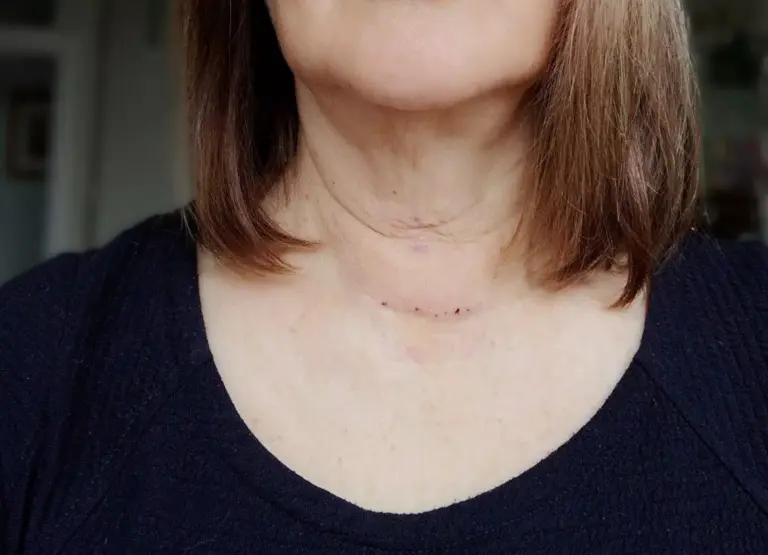
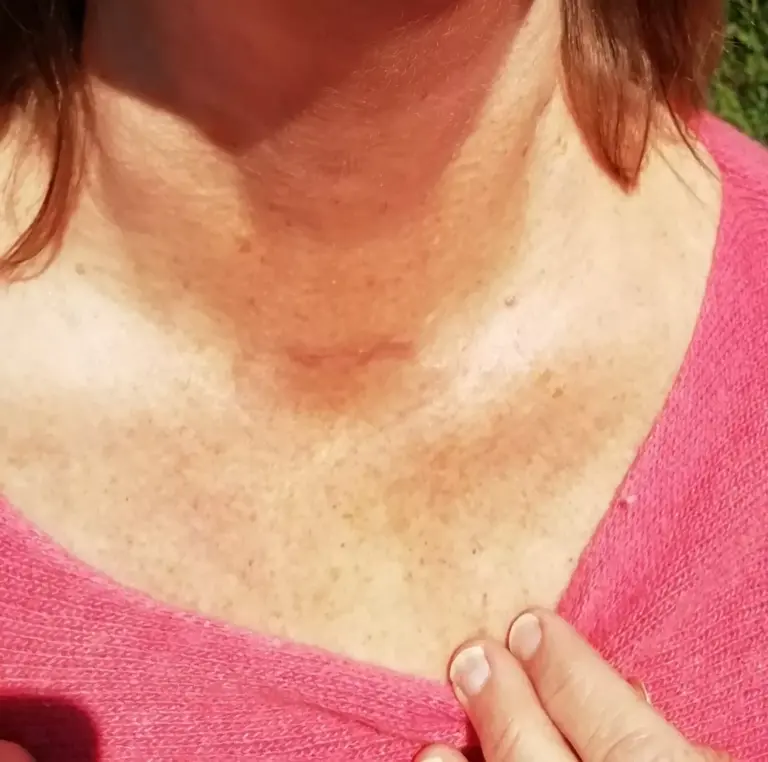
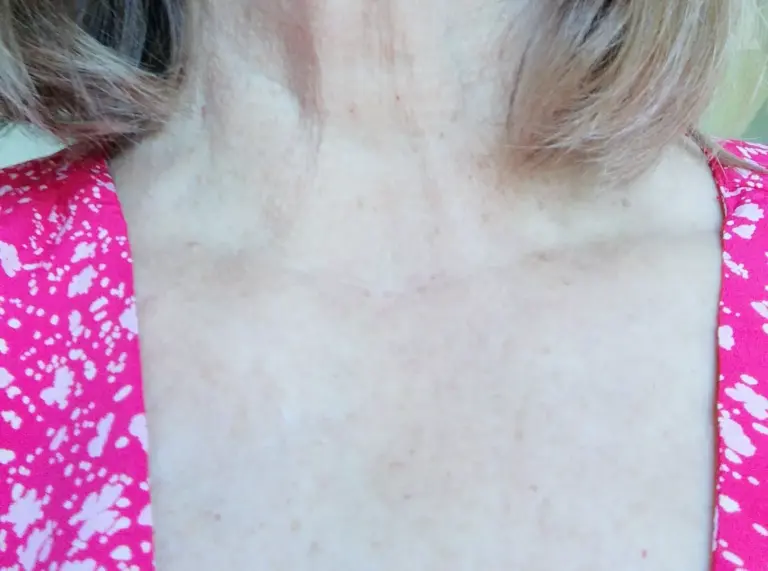
Examples of neck scars after parathyroid surgery with Mr Kirkby-Bott: one small scar in the middle of the neck, fading to a slight trace by three and a half months.
When should I call?
Occasionally, swelling or bruising can worsen suddenly after 7–10 days. It will settle following this, but please call us in working hours if you notice this.

 Phones open Monday to Friday, 9am to 5.30pm
What happens at my follow-up appointment?
Mr Kirkby-Bott always follows up thyroid and parathyroid cases. At this meeting we can:
- Discuss the histology or diagnosis from the resected specimen.
- Review any blood results taken to review surgery success.
- Check on your thyroid function to ensure you are on the right dose of medication, or review your thyroid function after a thyroid lobectomy. This blood test cannot be done less than 6 weeks after surgery.
- Discuss any questions you have regarding your surgery, post-surgery recovery and anything else that will help you get the best outcome from your surgery.
We will then discharge your care back to your referring doctor.
Still have questions?
Ultimately, it is up to you as to how much you follow this post-surgery advice and information. Your recovery will be affected by how closely you follow this guide.
If after reading this a couple of times you still have questions, please email them to us at [email protected] before your surgery, so we can answer them and make sure you are comfortable with and understand what you are agreeing to and why.
Related pages
Written by Mr James Kirkby-Bott. Last reviewed 14/10/2026
From the blog