At a glance
- A hemithyroidectomy removes one half (lobe) of the thyroid; a total thyroidectomy removes all of it1.
- When an operation is chosen, NICE guidance suggests a hemithyroidectomy for some unclear needle test results and a single overactive nodule23. It suggests a total thyroidectomy for Graves' disease and more advanced cancer23.
- After a total thyroidectomy you need thyroid hormone tablets for life1. After a hemithyroidectomy, the British Association of Endocrine and Thyroid Surgeons (BAETS) says about 1 in 5 people may eventually need them1.
This is for informational purposes only. It is not to be taken as medical advice.
If you need thyroid surgery, an early question is how much of the gland will come out.
What is the difference between a hemithyroidectomy and a total thyroidectomy?
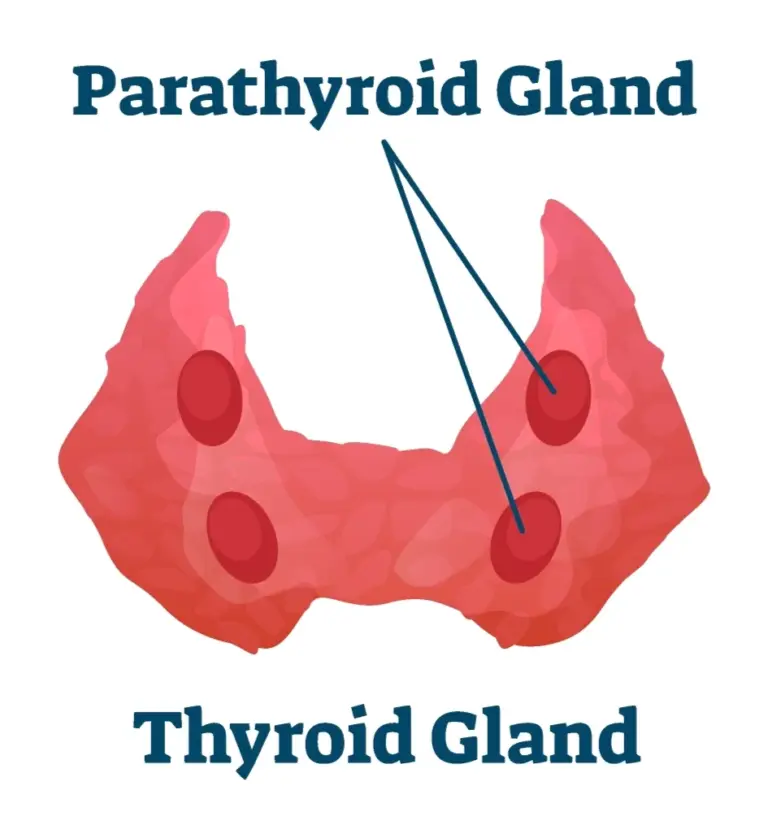
Your thyroid has two lobes, joined in the middle by a narrow bridge called the isthmus. A hemithyroidectomy, also called a thyroid lobectomy, removes one lobe and usually the isthmus1. A total thyroidectomy removes the whole gland1. NHS guidance on thyroid cancer calls removing part of the thyroid a partial thyroidectomy or lobectomy4.
"Partial thyroidectomy" simply means removing part of the thyroid, without saying which part. An isthmusectomy removes only the bridge in the middle. Repeat operations on the thyroid carry a higher risk of complications5. So we aim to operate on each side of the neck only once, and removing a whole lobe is usually the smallest operation we do on each side.
Why might I need a hemithyroidectomy?
A hemithyroidectomy is usually offered when the problem sits in one lobe. It is often "diagnostic": the half with the nodule is removed and examined under a microscope, because a needle test could not show whether it is cancer2.
The main situations are:
- An unclear needle test (biopsy) result. After a Thy3f result (suggesting a follicular growth), NICE's thyroid cancer guideline (2022) says to consider a diagnostic hemithyroidectomy26. Its experts put the chance of cancer at around 30%2. After a Thy3a result (unusual cells), NICE says to repeat the test, then consider a diagnostic hemithyroidectomy or monitoring if it is still Thy3a2. In my view, based on the BAETS database, both results should be treated the same way. In the UK registry (2016 to 2020), about 1 in 4 people who had surgery after either result had cancer5.
- A single overactive (toxic) nodule. NICE's thyroid disease guideline (2019) recommends radioactive iodine or a hemithyroidectomy as the first choices3.
- Some thyroid cancers. For differentiated thyroid cancers (the most common types) larger than 1 cm, NICE says either operation can be offered, unless there are higher-risk features2. For a single cancer smaller than 1 cm with no sign of spread to the lymph nodes, NICE says to consider a hemithyroidectomy or monitoring2.
For cancers at lower risk of coming back, NICE's experts say a hemithyroidectomy can work as well as a total thyroidectomy. It is potentially less harmful and may let you keep normal thyroid function2.
When is a total thyroidectomy recommended?
A total thyroidectomy is advised when the whole gland needs treating. NICE guidance suggests it for Graves' disease (when surgery is chosen), some overactive goitres with several nodules, and more advanced thyroid cancer23.
- Graves' disease (the most common cause of an overactive thyroid). NICE's experts recommend a total thyroidectomy for people choosing surgery, who in their experience want a lasting (definitive) treatment3.
- An overactive goitre (enlarged thyroid) with several nodules, if radioactive iodine is unsuitable3. NICE also lists lifelong antithyroid tablets3. Removing only half carries a greater chance of the overactive thyroid coming back3.
- More advanced thyroid cancer: a larger tumour or one growing outside the thyroid, spread to the lymph nodes or further away, or worrying features under the microscope2.
How do the risks and recovery compare?
A total thyroidectomy puts the voice nerves on both sides at risk, not just one7, and some risks are higher, as the table shows. Your own risks depend on your health and the reason for surgery.
| Hemithyroidectomy | Total thyroidectomy | |
|---|---|---|
| Voice nerves at risk | One7 | Both7 |
| Return to the operating theatre for bleeding | About 8 in 1,000 operations5 | About 15 in 1,000 operations5 |
| Low calcium (from the parathyroid glands beside the thyroid) | Rare: about 6 in 1,0005. In my view, even this reflects errors in reporting | About 18 in 100 after the operation; about 6 in 100 still taking calcium or vitamin D tablets at 6 months5 |
| Voice nerve still not working at follow-up | About 12 in 1,0005 | About 28 in 1,0005 |
| Hospital stay | About 1 in 10 went home the same day, and 8 in 10 after one night5 | About 6 in 10 went home after one night5 |
| Thyroid hormone tablets | BAETS says about 1 in 5 may eventually need them1 | Needed for life1 |
The registry figures cover first operations from 2016 to 2020, as reported by the surgeons themselves5. The registry holds about half of UK thyroid operations5. Some results were not recorded (the voice-nerve result for more than half of operations), so the rates may be underestimates5.
A UK registry paper says most bleeding happens within 6 hours of the operation8. BAETS recommends same-day (day-case) surgery only for low-risk hemithyroidectomy, with a stay of at least 6 hours9. In my practice, most people go home the same day after a hemithyroidectomy, if it is safe to do so, and after one night following a total thyroidectomy.
Continuous nerve monitoring during the operation is included in our self-pay price10, and our nerve monitoring page explains why we use it.
Will I need tablets or another operation afterwards?
After a total thyroidectomy, you will need levothyroxine (thyroid hormone) tablets for life1. After a hemithyroidectomy, most people keep enough thyroid function of their own1. We check your thyroid blood test at follow-up, no sooner than 6 weeks after surgery11.
For people who have had a hemithyroidectomy, NICE's guidance on overactive thyroid suggests a yearly thyroid blood test (TSH) in the longer term3. In my view, it is also worth checking if you have symptoms of an underactive or overactive thyroid.
If the removed half shows cancer, NICE says to offer an operation to remove the other half (a completion thyroidectomy) when the microscope review shows it is needed2.
How do we decide which operation is right for you?
The choice depends on why you need surgery, what your scans and needle tests show, and what matters most to you, such as avoiding lifelong tablets or a second operation. We talk the options through with you, so that we decide together.
How can I book a consultation?
Your GP can refer you to a specialist on the NHS.
We are happy to see you directly, or use your GP's results. We aim to offer a consultation within 1 week of contacting us directly, and to be able to offer surgery within 1-3 weeks from your initial consultation.
- Call 02380 178 991, Monday to Friday, 9am to 5.30pm. Evening appointments are available.
- Email [email protected].
- Use our online enquiry form.
Our self-pay prices are on our prices page. Read more about the thyroid conditions we treat.
This article is general information, not a diagnosis. Speak to your GP or specialist about your own results.
References
1. British Association of Endocrine and Thyroid Surgeons. Patient information leaflet T1: thyroid operations in adults. Updated 2024 Dec [cited 2026 Oct 25]. Available from: https://baets.org.uk/patient-information-leaflet-t1-thyroid-operations-in-adults-2/
2. National Institute for Health and Care Excellence. Thyroid cancer: assessment and management. NICE guideline [NG230]. London: NICE; 2022 Dec 19 [updated 2026 Mar; cited 2026 Oct 25]. Available from: https://www.nice.org.uk/guidance/ng230/chapter/recommendations
3. National Institute for Health and Care Excellence. Thyroid disease: assessment and management. NICE guideline [NG145]. London: NICE; 2019 Nov 20 [updated 2023 Oct 12; cited 2026 Oct 25]. Available from: https://www.nice.org.uk/guidance/ng145/chapter/recommendations
4. NHS. Treatment for thyroid cancer [internet]. NHS website; 2026 Oct 14 [next review due 2029 Oct 14; cited 2026 Oct 27]. Available from: https://www.nhs.uk/conditions/thyroid-cancer/treatment/
5. Aspinall S, Mihai R, Kinsman R, Walton P, on behalf of the British Association of Endocrine and Thyroid Surgeons. The British Association of Endocrine and Thyroid Surgeons Sixth National Audit Report 2021. Dendrite Clinical Systems; 2021 [cited 2026 Nov 3]. Available from: https://www.e-dendrite.com/wp-content/uploads/2025/01/BAETS-Database-report-2021.pdf
6. Royal College of Pathologists. Guidance on the reporting of thyroid cytology specimens (G089). 2nd ed. London: RCPath; 2016 Jan [cited 2026 Oct 25]. Available from: https://www.rcpath.org/static/7d693ce4-0091-4621-97f79e2a0d1034d6/g089_guidance_on_reporting_of_thyroid_cytology_specimens.pdf
7. British Association of Endocrine and Thyroid Surgeons, Dendrite Clinical Systems. BAETS Surgeon-Specific Outcomes: surgeon results page with national comparators and interpretation guide [Internet]. Data extracted 2019 Apr 24 [cited 2026 Oct 25]. Available from: http://baets.e-dendrite.com/nbsr/2891a251f1bcedf02127c439a7608b80/data
8. Doran HE, Wiseman SM, Palazzo FF, Chadwick D, Aspinall S. Post-thyroidectomy bleeding: analysis of risk factors from a national registry. Br J Surg. 2021;108(7):851–7. doi:10.1093/bjs/znab015 Available from: https://academic.oup.com/bjs/article/108/7/851/6145317
9. British Association of Endocrine and Thyroid Surgeons. BAETS position statement on daycase hemithyroidectomy [Internet]. BAETS; ratified 2020 Mar [cited 2026 Oct 25]. Available from: https://baets.org.uk/guidelines/baets-position-statement-on-day-case-hemi-thyroidectomy/
10. Kirkby-Bott J. Private surgery [internet]. Southampton: James Kirkby-Bott; [cited 2026 Oct 25]. Available from: https://jameskirkbybott.com/surgeries-offered/
11. Kirkby-Bott J. Recovering from thyroid and parathyroid surgery [internet]. Southampton: James Kirkby-Bott; [last reviewed 2026 Oct 14; cited 2026 Oct 25]. Available from: https://jameskirkbybott.com/thyroid-and-parathyroid-surgery/
About the author
Mr James Kirkby-Bott
Mr James Kirkby-Bott is a Consultant Thyroid, Parathyroid, Gallbladder, Hernia and Lipoma Surgeon (BSc(Hons), MBBS, FRCSEd(Gen), FEBS(Endocrine)). He has a private practice at Spire Southampton, Nuffield Health Wessex and Sarum Road hospitals.
For four years he has led the National Endocrine Audit Database for the British Association of Endocrine and Thyroid Surgeons (BAETS). Before that, he was in charge of clinical outcomes reporting at a large University Hospital for four years.
Written and clinically reviewed by Mr James Kirkby-Bott. Last reviewed 19/11/2026